Dear Colleagues,
This year will mark the 22st International Pharmaceutical Technology Symposium IPTS 2026 organized by Hacettepe University Faculty of Pharmacy Department of Pharmaceutical Technology as the current edition of a series of scientific symposia held every two years since 1982.
Since 44 years, IPTS has become a tradition bringing together representatives from academia, industry, regulatory authorities, and postgraduate students to discuss and collaborate on latest issues and hot topics in the fields of drug delivery, formulation development, manufacturing and regulatory sciences concerning pharmaceuticals as well as cosmetics, supplements and medical devices. It is our pleasure to keep the series of this highly prestigious event this year in our hometown in Ankara.
IPTS-2026 will be held on 9-11 September 2026 at the Bilkent Hotel Convention Center in Ankara city center where our university and department are also located. IPTS will comprise of a 3-day scientific programme with plenary lectures, scientific and industrial sessions in parallel halls, short courses, scientific awards and a lively social programme.
The main theme of the 22st IPTS will be " Pharmaceutical Technology at the Crossroads of Innovation: AI, Nanotech, and Beyond ". In this context, a comprehensive program is being prepared consisting of scientific sessions focusing on applications of enabling tools such as artificial intelligence and machine learning, nanobiotechnology, 3D and 4D printing and innovative drug delivery systems and their implications in pharmaceuticals, regulatory science and patient access to new and safe medicines and healthcare. Our distinguished plenary lecturers Maria Jose Alonso, Abdul Basit, Bruno Sarmento, Hamid Ghandehari and Rogerio Gaspar will be leading and inspiring the scientific discussions as well as more than 30 invited speakers from all over the world.
The industrial sessions will be dedicated to Innovation Leading Regulatory Science in Healthcare with the following sessions/minisymposia;
The industrial sessions will be finalized with a panel discussion and open forum on “Localization of medicines, medical devices and vaccines” with representatives of Ministry of Health and Ministry of Industry and Technology, pharmaceutical and biotech industry, research centers, CROs and scientists.
We sincerely hope to meet you in Ankara to join us at the IPTS 2026 and enjoy a strong scientific programme, social activities, and the capital city of Turkiye in its best season. Plenary and invited lecturers, short oral presentations from selected abstracts and poster presentations will help this meeting succeed. There will be a Special Issue for IPTS 2026 as well. Traditional IPTS Awards will also be given to Best M.Sc. and Ph.D. theses, best Oral Presentation and Best Poster Presentation selected by independent juries. Further information will be available at our website http://www.ipts-hacettepe.org for your information.
With our best regards on behalf of the IPTS Organizing Committee,

Prof. Erem Bilensoy
IPTS 2026 Chair and Head of Department
Erem Bilensoy
Kıvılcım Seyhun


Abstracts must be submitted online by the Symposium Submission System not later than July 1st 2026.
The following sections MUST be in the abstract:
Only online submission to the to the Symposium Submission System is accepted.
Best Oral Presentation Award will be given to one of the oral presentations after the scientific evaluation of the jury. The jury will be evaluating the abstract of the oral presentation as well as the presentation that will be done by the candidates.
The candidates shall make a presentation in English (5 minutes presentation+ 2 minutes discussion), which is also going to be considered as a parameter for the scoring of the presentation by the jury members. The jury will be evaluating the presentation technique, scientific content and timing of the presentation. The results will be announced in the closing ceremony of IPTS 2026 and the winner will be awarded with a honorarium and free
registration for 23rd IPTS.
Best Poster Award will be given to one of the poster presentations after the scientific evaluation of the jury. This jury will be evaluating the candidate during the poster session and over the abstract which will be submitted by the authors. The results will be announced in the closing ceremony of IPTS 2026 and the winner will be awarded with a honorarium and free registration for 23rdIPTS.
Best Ph.D. Thesis Awards are now opened for candidates registered to Ph.D. Programmes of Division of Pharmaceutical Technology under the Institute of Health Sciences of Universities in Republic of Turkey.
| Before July 26, 2026 | After July 26, 2026 | |
|---|---|---|
| Student* | € 175 | € 225 |
| Senior Academic | € 250 | € 350 |
| Company Delegate | € 350 | € 450 |
Registration fee includes attendance to scientific sessions, industrial sessions, coffee breaks, lunches (according to the symposium program) and scientific documents.
Please contact official symposium agency Unicon Mice Kongre Turizm Organizasyon Hizmetleri Ticaret Limited Şirketi. for your registration ipts@uniconmice.com.tr
*B.Sc, M.Sc and Ph.D students must provide a valid student ID.
Gala dinner fee is 50 € + TAX
%20 TAX is not included and will be added to prices.
| Bilkent Hotel Conv. Center | Before July 17, 2026 | After July 17 2026 |
|---|---|---|
| Single Use Room | € 270 | € 320 |
This prices include two nights single use room and breakfast. %12 Taxes will be added to the prices. Rooms will be confirmed up on payment completed.
| Account Name | Unicon Mice Kongre Turizm Organizasyon Hiz.Tic.Ltd.Şti. |
|---|---|
| Bank Name | VAKIFBANK |
| Swift Code | TVBATR2AXXX |
| Branch Name | Gimat Şubesi - Ankara |
| Account No | 0015 |
| TL IBAN | TR34 0001 5001 5800 7345 6463 70 |
| USD IBAN | TR48 0001 5001 5804 8024 7070 32 |
| EURO IBAN | TR91 0001 5001 5804 8024 7070 34 |
Please note that, accommodation reservations will be confirmed by payment document.


Located 2 km from Bilkent University, this modern and comfortable hotel is 14 km from Anıtkabir, where Mustafa Kemal Atatürk's tomb is located, and the iconic Kocatepe Mosque.
Comfortable rooms feature free WiFi, a flat-screen TV and a mini-refrigerator, as well as a safe, a work desk and tea/coffee making facilities. All rooms offer pool, garden or city views. Luxury rooms and suites feature opulent decor. 24/7 room service is available.
Parking is available and breakfast is served in a modern restaurant with a terrace. Other amenities include a pub-style bar, an outdoor swimming pool, a poolside bar and a spa. A conference center with 21 meeting rooms is also available
 We host all your congresses, conferences, and meetings in our 21 multi-purpose meeting rooms of varying sizes and spacious foyer areas. Please inquire for advantageous meeting packages and menu options.
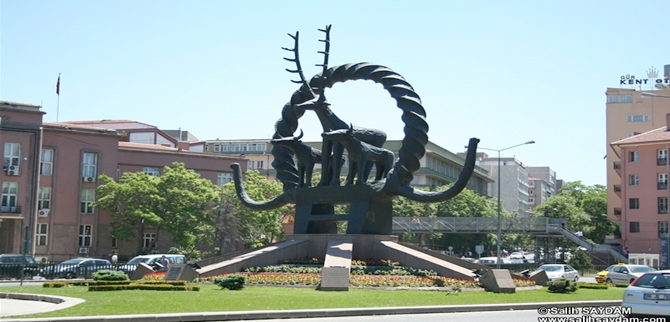
Located in the Central Anatolian Region, Ankara is surrounded by Kırıkkale and Kırşehir at East, Çankırı at North, Bolu at the Northeast and Eskişehir at West, Konya and Aksaray at South. The average altitude above sea level of Ankara covering 26.897 kilometer square of land in a region dominated by plains formed by Kızılırmak and Sakarya Rivers, is 890 meters. While approaching towards north from the central parts of the city, you will see where the across North Anatolian mountain chain rises. Plains which were formed due to wreckage area and foldings between the mountains chains are located at the North East while there are Tuz Gölü (Salt Lake) basin and planes at the South part of Ankara Plain lying on the East-West direction. There are Mogan, Eymir, Karagöl, Kurumcu and Samsam natural lakes within the city borders. In addition to these, there are artificial lakes at the water basins of the dams of Çamlıdere, Kesikköprü, Kurtboğazı and Sarıyar having same name with them.
Excavations carried out in and around Ankara revealed that the early settlement in the region goes back to prehistoric ages. Ahlatlıbel, Koçumbeli, Etiyokuşu, Karaoğlan which are among the settlements of Bronz Age dated 3000 B.C. have the power to display the characteristics of the Central Anatolian culture. The Ankuwa city which is frequently mentioned in the Hittite works was probably located at today’s Ankara. The first foundation of Ankara as a city took place during the Phrygian Era. Gordion, the capital city of Phrygia is one of the most important ancient sites of the Central Anatolia. According to the legends, great Phrygian King Midas had founded the Ankara city. Phrygians named this place as “Ankyra” meaing “anchor.” Tombs in the region revealed that the importance of Phrygian settlement especially between 750-500 B.C. It is know that the city which was under the domination of Lydians and Persians after the collapse of Phrygia,was a minor trade center on the famous Royal Road which was built during the reign of Persian King Darius I (522-486 B.C.).After Gordion, King of Macedonia, Alexander the Great ( 336-323 B.C.) came to this place in 333 B.C. and ended the Persian domination in the Anatolia. It is known that Tetosags, a tribe of Galatians who came to the Anatolia from Europe between 278-277 B.C. made Ankara their capital city. Roman Empire Augustus defeated Galatians in the 25 B.C. from Galatians, joined the region to the Roman Empire and declared the city as the capital of Galatian province. Ankara in the 1st and 2nd century A.C. became a very imporant junction in the Roman road network in the Anatolia and was a developed city in terms of administrative and military functions.When in 395 B.C. the Roman Empire was divided into two, Ankara region remained under the rule of Eastern Roman Empire (Byzantine) and preserved.
Ankara which became the symbol of National Struggle as being the administrative center of the War of Independence after 1920, became the capital city of Turkish Republic on October 13, 1923. Central districts of Ankara are:Akyurt, Altındağ, Çankaya, Çubuk, Elmadağ, Etimesgut, Gölbaşı,Keçiören,Mamak,Sincan,Pursaklar and Yenimahalle. Its rural districts are Ayaş, Bala, Beypazarı, Çamlıdere, Evren, Güdül, Haymana, Kalecik, Kazan, Kızılcahamam, Nallıhan, Polatlı and Şereflikoçhisar.its importance during this period and decorated with a number of new buildings. Seljuk Turks who started to enter the Anatolion soil at the end of the 11st century, captured the city in 1073 and ended Byzantine dominance. Starting from this date until Ottomans founded the political unity in the Anatolia, the city lived different periods under the dominance of Turkmen Beyliks, Byzantine and Moguls. Ankara which gained trade function as one of the Ahi centers after 1300, remained as an important trade center during the Ottoman Empire period.
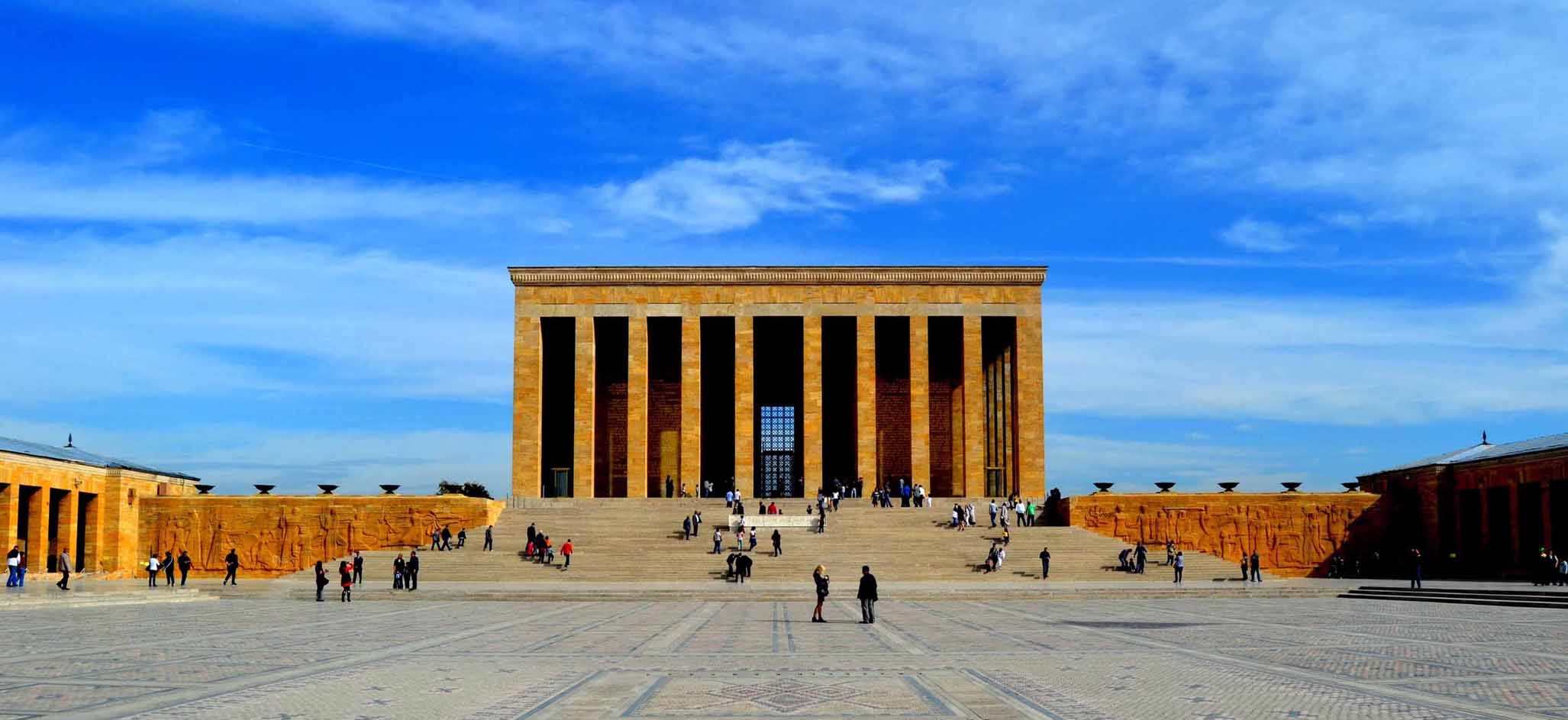
Anıtkabir: Founder of Turkish Republic, the Great Leader Mustafa Kemal Atatürk has reached eternity on 10th of November 1938. The Presidential elections were held on the 11th of November and following the election of İsmet İnönü as the new President, the burial procedures for Atatürk’s funeral began. Atatürk's casket was taken out the Dolmabahçe Palace on November 19 placed on a horse-drawn caisson and brought in Sarayburnu. His casket taken to Zaffer torpedo boat and forwarded it to the battlecruiser Yavuz. The battlecruiser was escorted by Hamidiye, Zafer, Tınaztepe cruisers and 2 submarine boats as well as Savarona and foreign vessels. Yavuz battlecruiser then landed to İzmit Mine Dock and Atatürk's casket was then transfered to the İzmit Train Station.The casket was taken into White Train which was used by Atatürk during his country visits when he was alive and which is currently preserved at the Ankara Train Station Building and brought to Ankara Train Station. Atatürk's casket was brought on a caisson which is currently on display at the Peace Tower of Anıtkabir, to the building of 1st Turkish Grand National Assembly and then to the Etnography Museum with a state ceremony. His casket was buried in a speical place reserved for his body in the museum on November 21, 1938. His body stayed there for 15 years while monumental mausoleum for Atatürk at the topmost hill in Ankara, Rasattepe was constructed as the symbol of Turkish Nation’s loyalty based on the idea that “A monumental mauseleum would be very beautiful in this place.” Anıtkabir is made up of Monumental blog and the Peace Park. Peace Park formed by 48.500 various kinds of plants and trees sent from different parts of our country and various different countries of the World is a symbolic League of Nations, displaying the principle of “Peace at home, Peace in the World.” When entered from the Tandoğan Gate, you would see 24 lion sculptures representing the 24 Oghuz Tribes at both sides of the road through Peace Park leading to the monumental mauseleum. The monumental mauseleum construced on a rectengular plan is surrounded with columns at four sides and there are Atatürk’s “Address to the Turkish Youth” and his speech on the occasion of the 10th anniversary of the Republic known as the “Great Speech” written on the walls with golden letters. Surface and walls of the Hall of Honor is covered with colorful marbles. Its flat ceiling is decorated with mosaics inspired by the carpets and rugs of 16th and 17th century.
Atatürk’s symbolic tomb made up from a single piece red marble is plain. His corpse is buried in a special Tomb Room below the Hall of Honor. There are 10 towers having different symbolic meanings namely Independence, Freedom, Mehmetçik, Victory, Peace, April 23, National Pact (Misak-i Milli), Reforms, Republic and Preservation of Rights inside the Anıtkabir placed symmetrically starting from the entrance. Inside the pyramid roofs built on the rectangular plan, geometric ornamentation inspired by traditional Turkish carpet (kilim) patterns and motifs, can be found on the towers' ceilings in fresco technique.Reliefs displaying figures about the name of the tower and sayings of Atatürk, can be seen at the interior walls. Tomb of the Second President of Turkey, İsmet İnönü is placed in between the Victory and Peace Towers. The museum which is entered from the National Pact Tower located at the left of Monumental block when viewed from the Ceremony Ground was opened on June 21 1960 under the name of the Anıtkabir Atatürk Museum. Within the framework of a project prepared by the Commandership of Anıtkabir in 2001, approximately 3.000 square meter long columned area under the Hall of Honor at the mauseleum is included to the museum. The museum’s display areas reached to 5.200 square meters with the framework of the project. The museum together with the new edition completed on August 26, 2002 was opened with a state ceremony. Starting from this date, the museum is called as the Atatürk and the War of Indepedence Museum.
At the first section of the museum made up of four sections, personal belongings of Atatürk, gifts from foreign statesmen and belongings of Atatürk donated by his adopted children namely Afet İnan, Rukiye Erkin and Turkey’s first female pilot Sabiha Gökçen can be seen. The second section of the museum is decorated with oil paintings of epic the War of Gallipoli, the Battle of Sakarya and the Great Offensive. This section aims at displaying the hardships experienced for the foundation of the Turkish Republic. The third section includes gallaries explaining the War of Independence and reforms as well as Atatürk’s Tomb Room. This section explains the events that took place between 1919-1938 in Turkish and in English. The last section plays host to the Special Library of Atatürk including 3123 books belonging to Atatürk. There is also a computer section in this section which includes documentations about the construction of Anıtkabir, the life of Atatürk and ceremonies took place in Anıtkabir.
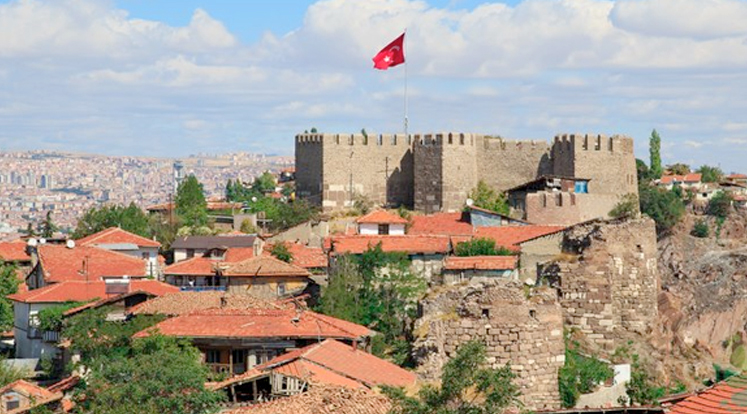
The Ankara Castle: Date of construction of the Ankara Castle which is located on a hill dominating Ankara and which became the symbol of the city in time is not certain. The castle which was known to be existed in the 2nd Century B.C. during the Galatian Period was restored during the Roman Period. Interior ramparts of the castle made up of two parts namely interior and exterior castles was most probably constructed by Byzantines in the 7th Century. Ramparts of the castle which was seriously damaged during the Arab invasion was repaired again by the Byzantines. Construction date of the exterior rampart was not clear. It was captured by the Seljuks in 1073 and the castle went through several different repairs during the Ottoman Period, reinforced by restoration in the last recent years. There are 20 rectangular towers at the exterior castle and it has two doors namely the “Exterior Castle Gate” at West and the “Fort Gate” at South. There is a scripture in Persian Language belonging to Ilkhanid Period dated 1330 on the Fort Gate. The interior castle which is rectangular in shape is made up of Ankara stone and mixed materials. The interior castle consists of 42 pentagonal towers whose heights vary between 14–16meters. Ankara Houses inside the castle that remained from the 17th century Ottoman Period and Alaeddin Mosque are still standing.
Ankara which is generally under the influence of continental climate has cold and rainy winters and hot and dry summers. Climate changes can be seen in the large area of the city. Steppe climate which is the distinct characteristics of the Central Anatolia climate can be seen at the South parts of the city while temperate and rainy characteristics of the Black Sea region can be observed at the North.
Monthly average temperatures in Ankara: Average temperature in September in Ankara: 19 °C.
Transportation opportunity to every city in the country is possible from the intercity bus terminal (AŞTİ) which is located at the center of highway networks. It is possible to travel between Ankara İstanbul, Ankara-İzmir, Ankara-Balıkesir, Ankara-Isparta-Burdur, Ankara-Zonguldak, Ankara-Adana, Ankara-Elazığ-Diyarbakır by train. Airline transportation is available at the international Ankara Esenboğa Airport located 28 kilometers away from the city center, giving domestic and foreign flight services. There are modern and techniqually equiped terminal buildings, 4336 vehicle capacity parking lot, food court, shops, banks, rent-a-car, taxi and bus services at the domestic and international flights sections of the International Ankara Esenboğa Airport. Transportation between the Ankara city center and the Esenboğa Airport is carried out by special Ankara Air.